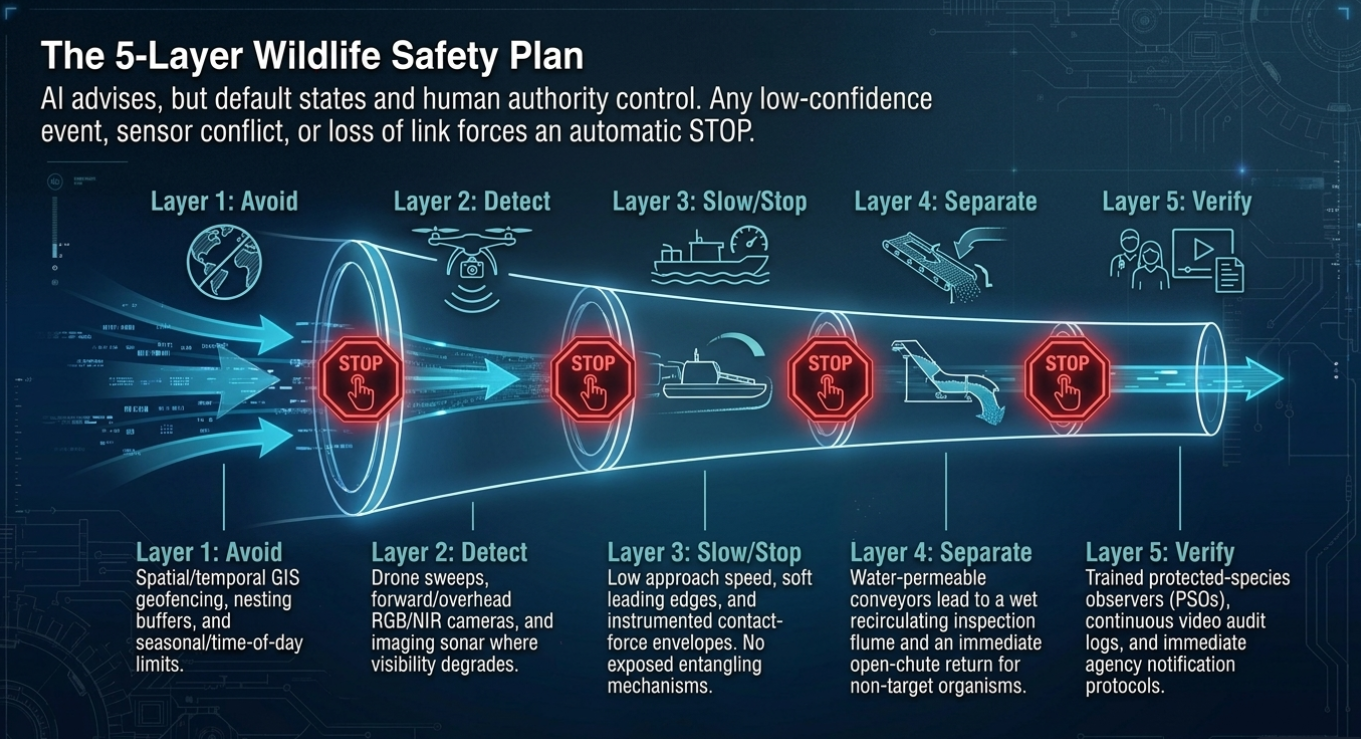
AVOID
No operations in dispersed GREEN-stage habitat, in known turtle corridors, or during closed windows. The default answer is no collection.
The solution
It only stinks if we leave it in the water. Interception is not theoretical — booms and harvesting vessels operate today across the Mexican Caribbean. What is missing in U.S. federal waters is permission, safeguards and public accounting.
Safeguards first
Every layer must hold before a single collection operation is authorized. Any observer can stop the operation at any layer.
No operations in dispersed GREEN-stage habitat, in known turtle corridors, or during closed windows. The default answer is no collection.
Forward sonar, drone and surface spotters, and observer watch before and during approach. Detection failure means the operation does not start.
Low-speed approach with immediate shutdown authority for any observer. Speed is capped so animals can leave the area.
Escape-permitting gear geometry, deep-boom designs that let turtles and fish pass underneath, and surface-only interception of floating mats.
Independent observer records every interaction, all bycatch is documented and published, and repeated failures suspend the authorization.
In practice
Hardware
Deployed today
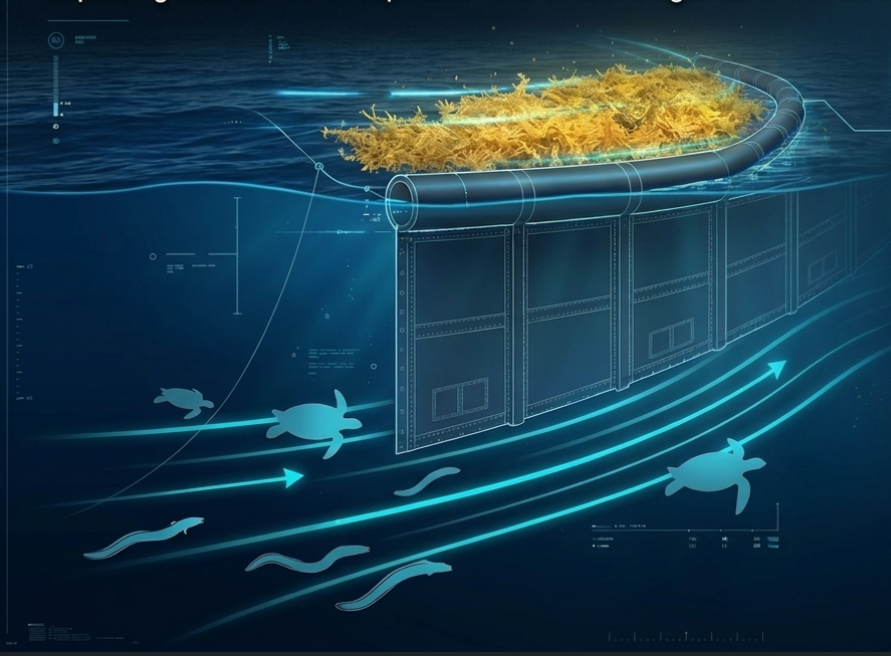
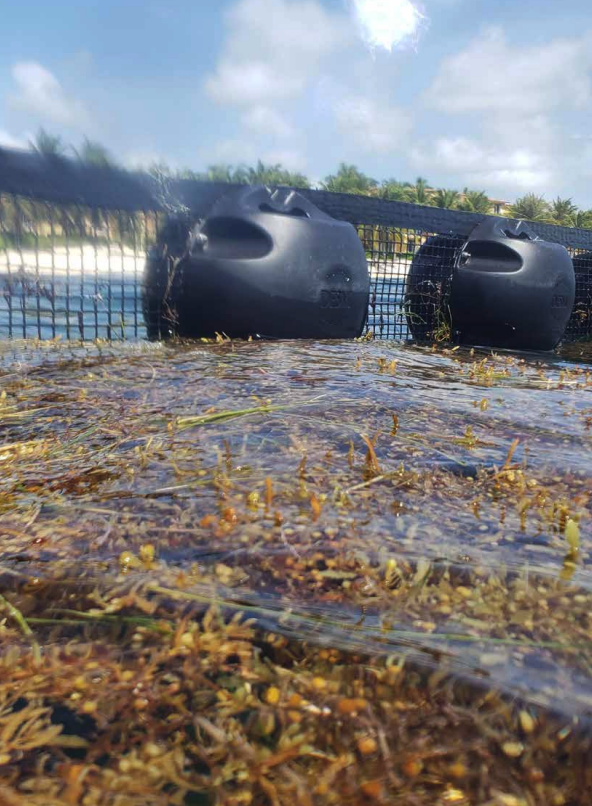
A surface barrier with a deep skirt intercepts floating mats while sea turtles, fish and marine mammals pass underneath. Proven in nearshore deployments across the Mexican Caribbean.
Deployed today
Conveyor-equipped harvesting vessels lift biomass out of the water and offload to shore for processing. Already operating in Quintana Roo.
Concept illustration
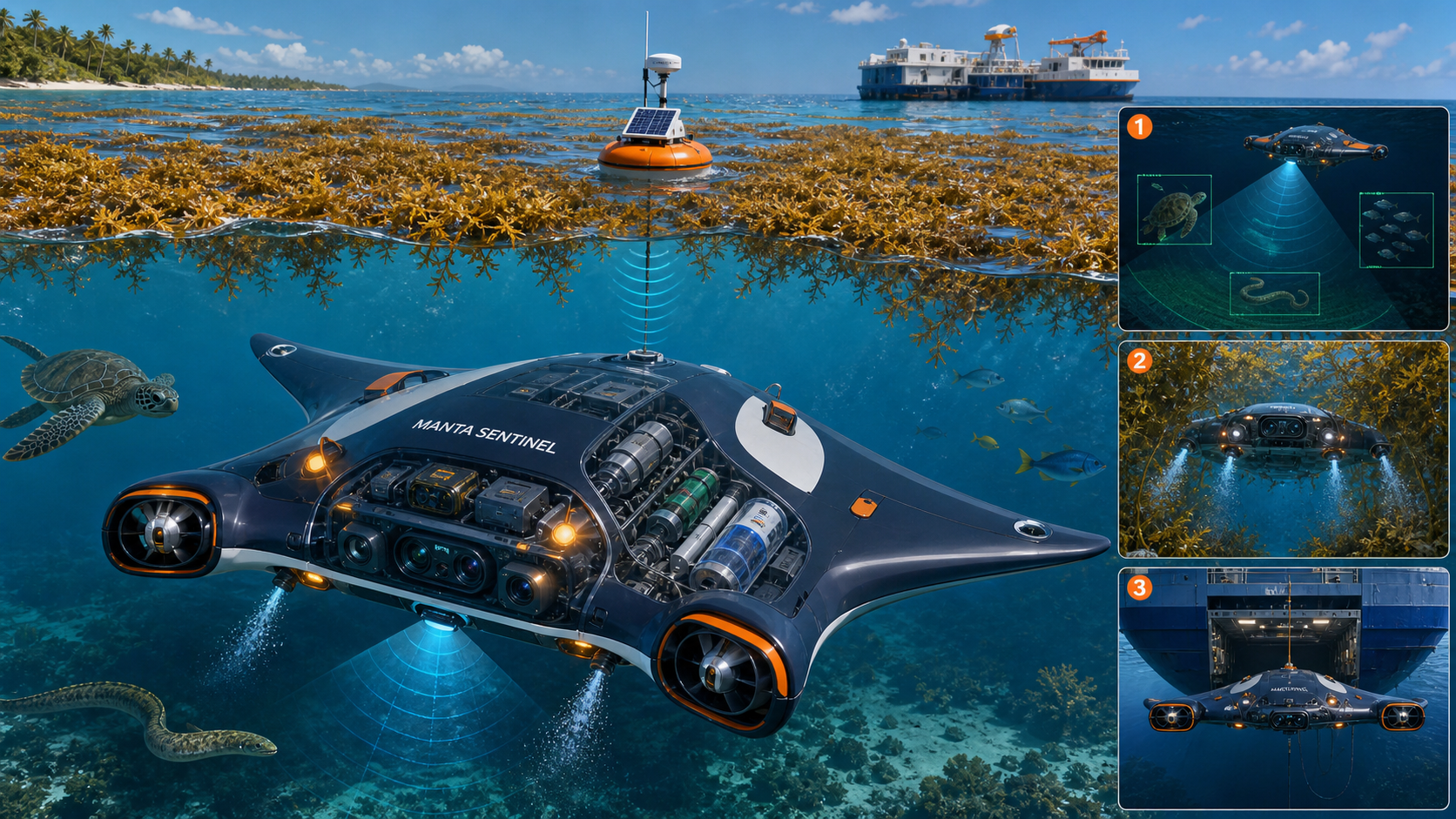
An autonomous sub-surface sentinel that maps mat thickness and drift with sonar beneath the mat, feeding detection triggers and wildlife-avoidance decisions before a vessel ever approaches.
Research pathway
Collected biomass can be routed to compost, biochar, biogas, construction material or arsenic-managed disposal rather than landfill. Beneficial use pathways must be validated for arsenic before land application.
After collection
Collected biomass can go to compost, biochar, biogas or construction material instead of landfill. Because arsenic mobilization from Sargassum is measured, every beneficial-use pathway must be validated for arsenic before land application. We will not sell a circular-economy story ahead of the chemistry.