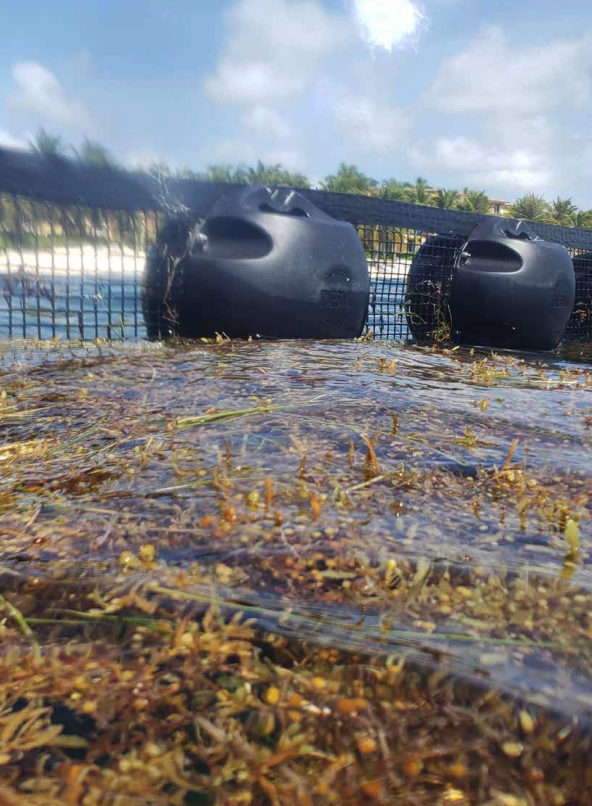
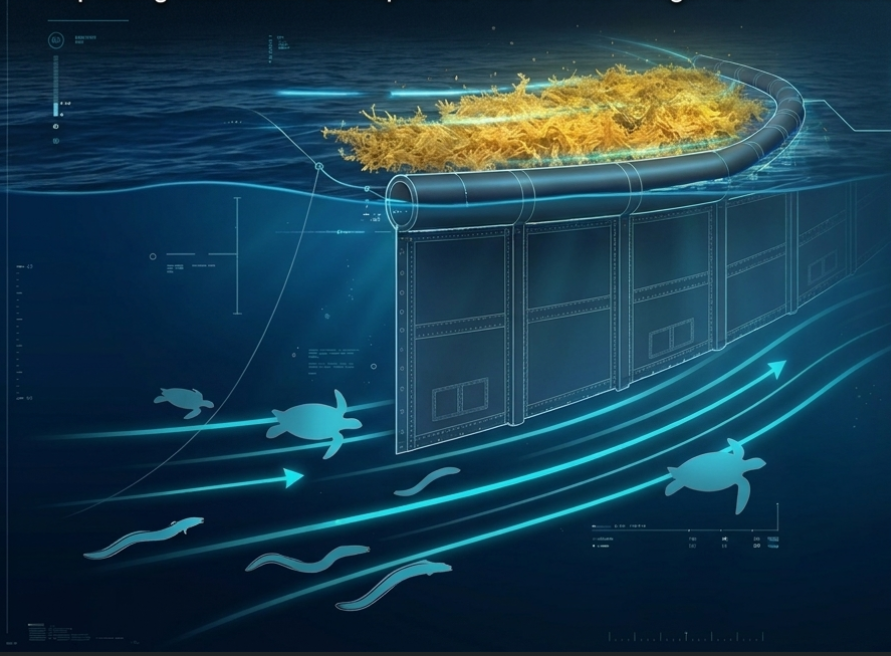
Deep boom interception
A surface barrier with a deep skirt intercepts floating mats while sea turtles, fish and marine mammals pass underneath. Proven in nearshore deployments across the Mexican Caribbean.
Technology
We separate what is already operating in the water from what is a rendering. Conceptual illustrations are marked as concepts and never presented as deployed systems.
Systems
A surface barrier with a deep skirt intercepts floating mats while sea turtles, fish and marine mammals pass underneath. Proven in nearshore deployments across the Mexican Caribbean.
Conveyor-equipped harvesting vessels lift biomass out of the water and offload to shore for processing. Already operating in Quintana Roo.
An autonomous sub-surface sentinel that maps mat thickness and drift with sonar beneath the mat, feeding detection triggers and wildlife-avoidance decisions before a vessel ever approaches.
Collected biomass can be routed to compost, biochar, biogas, construction material or arsenic-managed disposal rather than landfill. Beneficial use pathways must be validated for arsenic before land application.
Detection
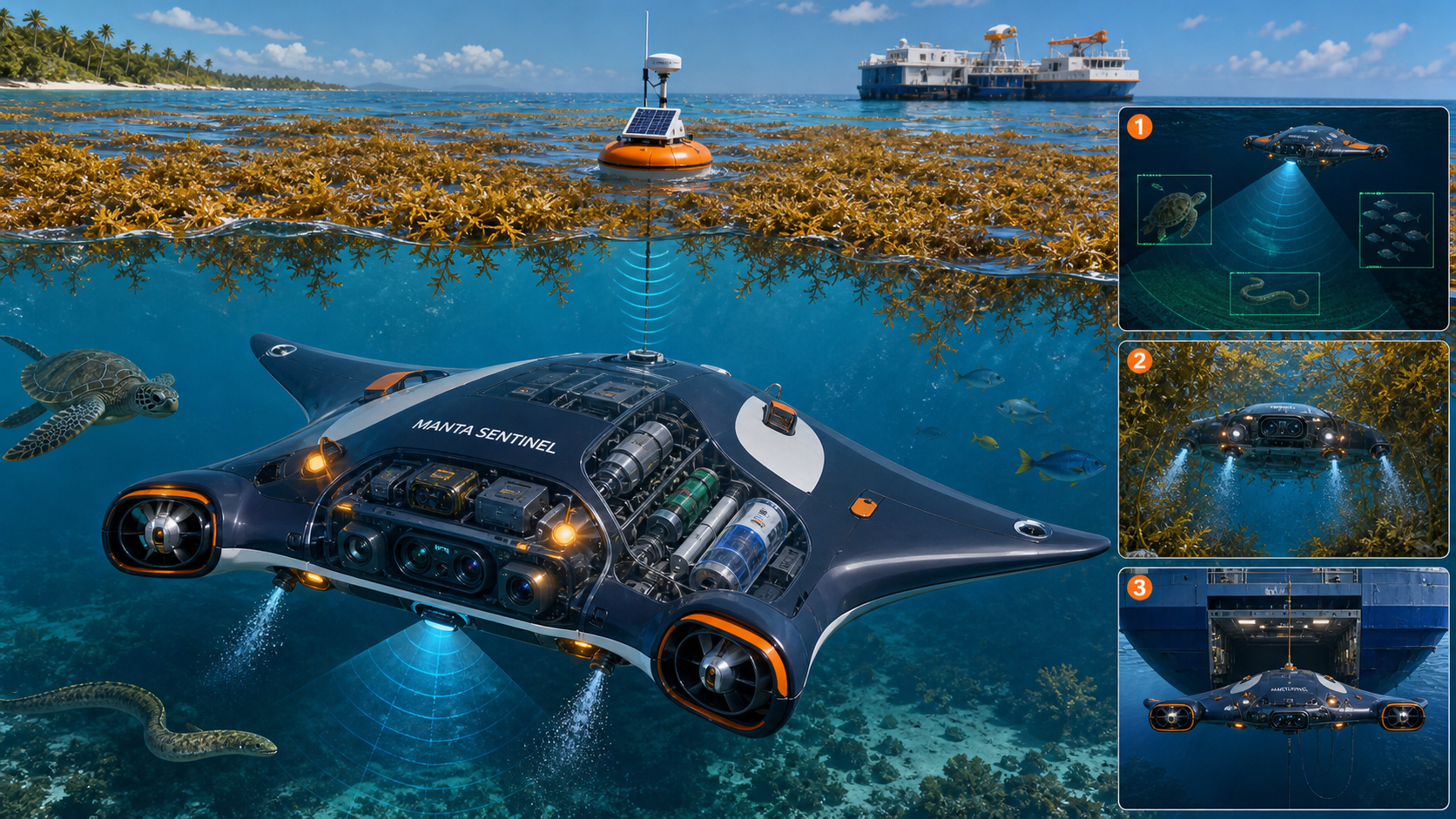
Detection is the layer that decides whether a vessel ever approaches. A sub-surface sentinel maps mat thickness, drift vector and animal presence beneath a raft, feeding the AMBER-stage trigger and the wildlife-avoidance decision. This is a concept illustration, not a deployed system.
Concept model
An interactive 3D model of a concept vessel designed to steer around living rafts, clear animals ahead of its intake and return anything that rides aboard to the sea alive. Ten stages, five camera views, X-ray and live counters. A design model, not a deployed system.
Open the 3D modelIn the water now