01
AVOID
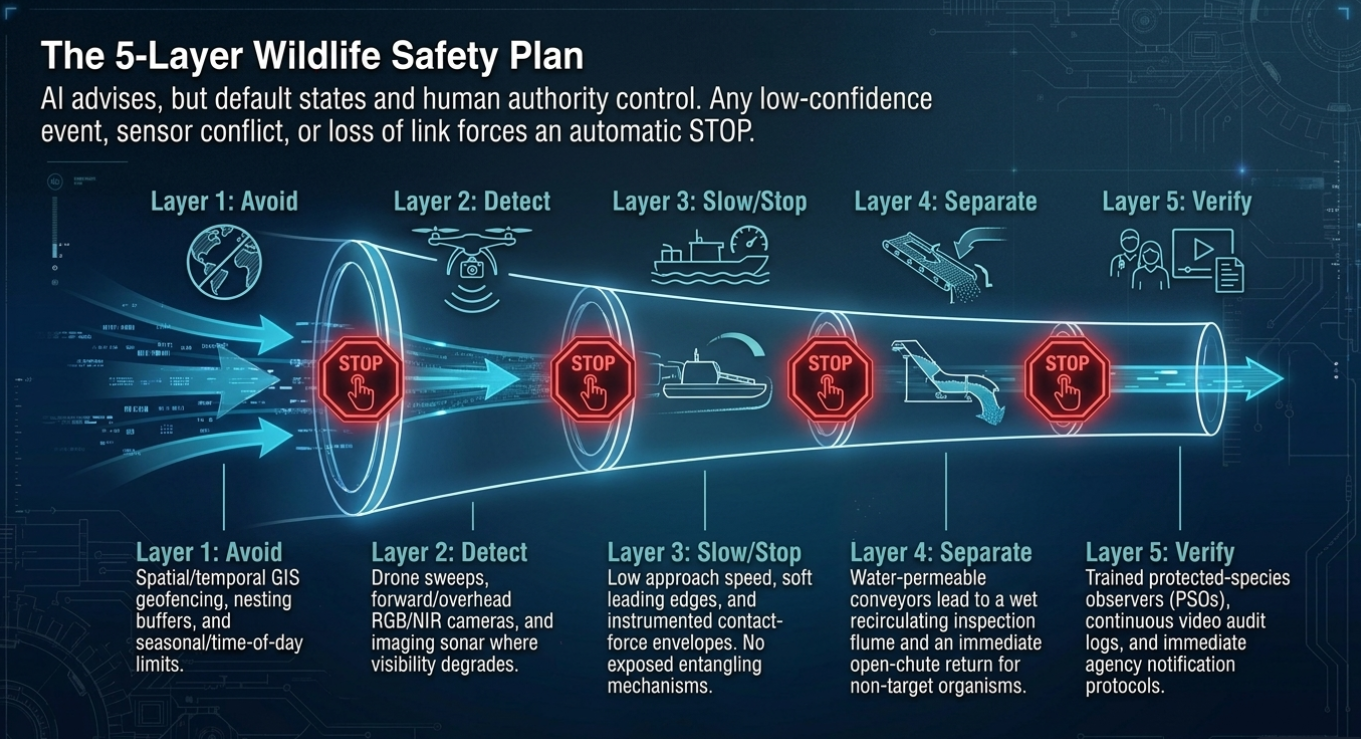
No operations in dispersed GREEN-stage habitat, in known turtle corridors, or during closed windows. The default answer is no collection.
Wildlife safeguards
Juvenile sea turtles, endemic Sargassum crabs and shrimp, juvenile fish and migratory species depend on healthy floating mats. This campaign's entire moral position collapses if collection harms them. So the safeguards are the first design constraint, not an afterthought.
Protocol
AVOID
No operations in dispersed GREEN-stage habitat, in known turtle corridors, or during closed windows. The default answer is no collection.
DETECT
Forward sonar, drone and surface spotters, and observer watch before and during approach. Detection failure means the operation does not start.
SLOW / STOP
Low-speed approach with immediate shutdown authority for any observer. Speed is capped so animals can leave the area.
SEPARATE
Escape-permitting gear geometry, deep-boom designs that let turtles and fish pass underneath, and surface-only interception of floating mats.
VERIFY
Independent observer records every interaction, all bycatch is documented and published, and repeated failures suspend the authorization.
Gear geometry
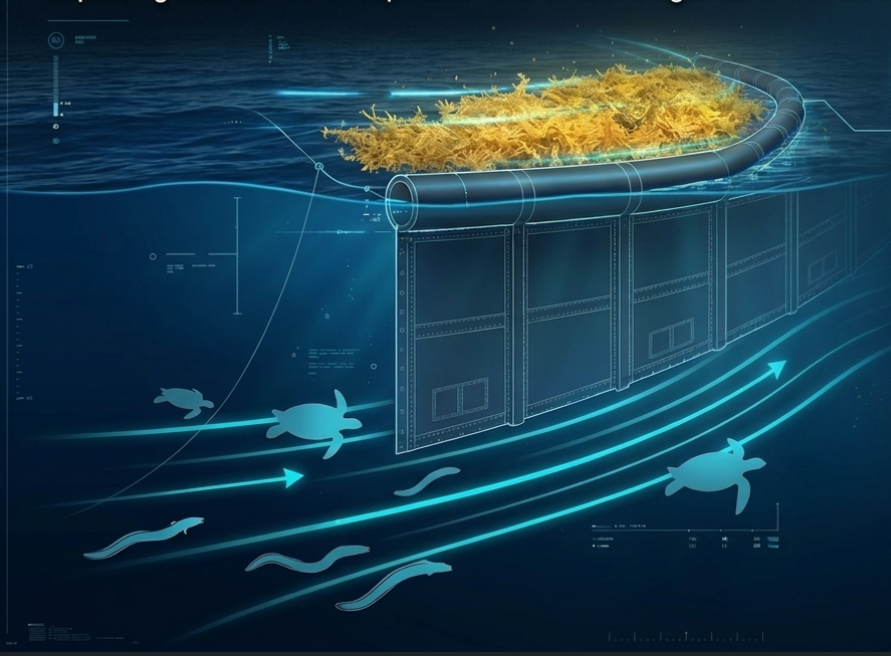
A deep boom skirt intercepts only what floats. Turtles, fish and mammals pass beneath the barrier. Surface-only interception is the design rule: if a method requires netting through the water column, it does not belong in this pilot.
Accountability